

Let’s do this. Let’s get you meal planning on a budget so that you can make ends meet and even save for fun stuff. Follow these easy money-saving strategies to meal plan on a budget while enjoying great food.

Want to save this post?
Enter your email below and get it sent straight to your inbox. Plus, I’ll send you budget recipes and money-saving tips every week!
Whew. Food prices have gone crazy, haven’t they? Sure, some sale prices are pretty decent, but overall, grocery prices need to take a chill pill.
Now is the time to plan your meals on a budget.
If you’re new to budget meal planning, then take a deep breath. I’ve got you. Having raised six kids on a blue collar income – while living debt-free! – I know all too well how important it is to save money at the grocery store and plan budget meals.
I currently grocery shop for a large family, 7 adults, on a budget.
In the last recession, my husband and I paid off 60k in consumer debt, in part by changing our grocery shopping habits and meal plans. You can save, too, when you meal plan on a budget and eat cheap with the Good Cheap Eats System.
Why Budget Meal Plans?
The thing is: meal planning alone won’t save you money.
Seriously, anyone who says, “all you have to do to save money is meal plan,” well, they’re wrong.
I can meal plan all kinds of tasty things, like filet mignon and lobster tail or even boneless skinless chicken breast when it’s not on sale, and I’ll spend way too much cash.
The trick is to meal plan to save money. That is a different thing altogether!
When you meal plan on a budget, you free up extra money within your overall budget for bigger and better things, like travel, savings, college, or paying off debt.
Here are my best tips to meal plan on a budget:
Plan meals you like to eat.
If you don’t actually like what meals you plan, you’ll be less likely to follow your plan. Then you won’t want to cook at home and you’ll grab that overpriced burger or burrito. Not cooking at home will wreak your budget, so this is important!
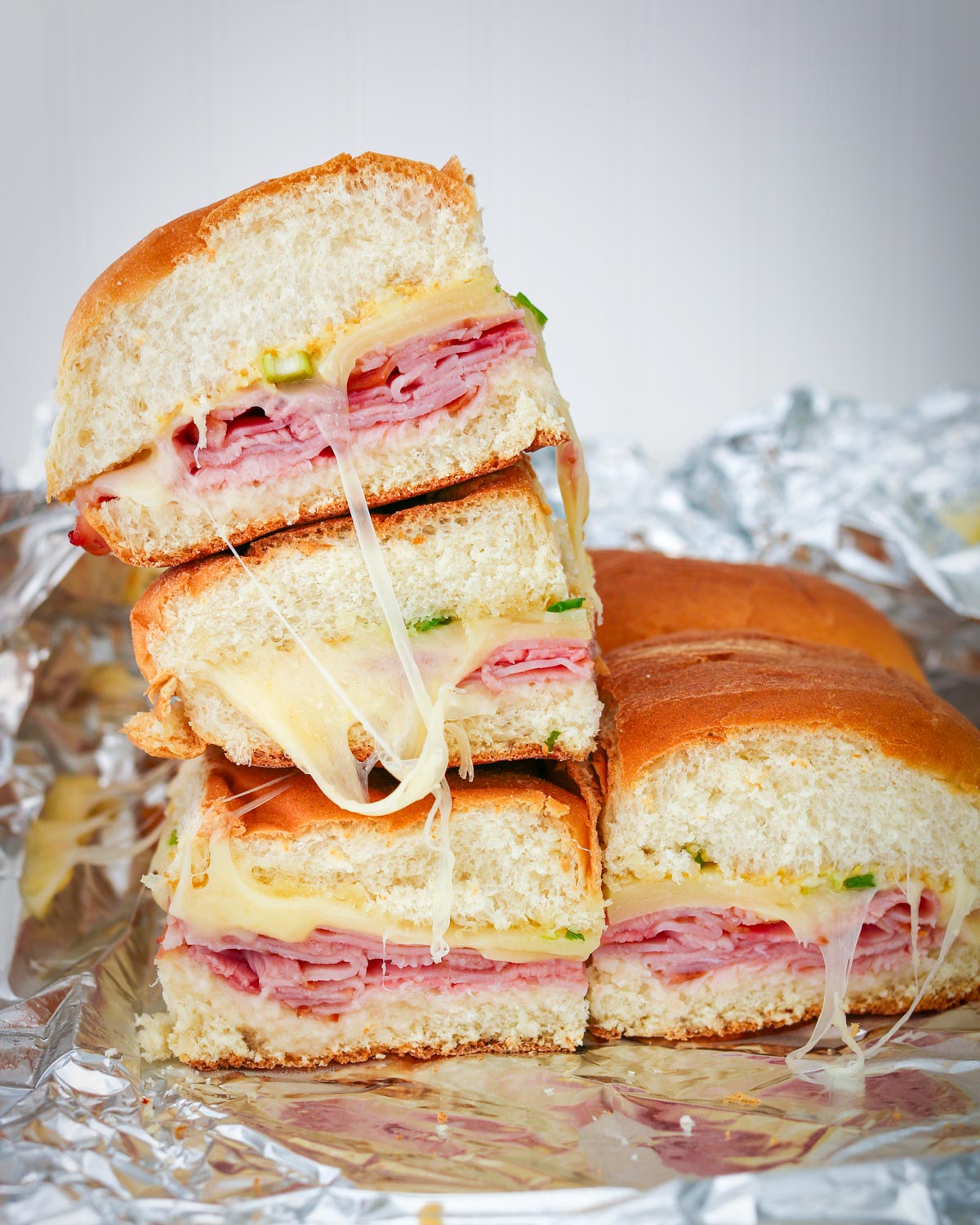
Love ham and Swiss cheese on Hawaiian bread? Then make sure you keep those things on hand.
Not a fan of salad? Then plan a different kind of veggie.
Even if the meals you like cost a little bit more than the cheapest meals possible, if it helps you avoid take-out and pricey restaurant food, it’s a win!
And yes, there are plenty of your restaurant faves that you can make more cheaply at home. Home cooked meals can be just as delicious as what Door Dash delivers.
Consider your schedule.
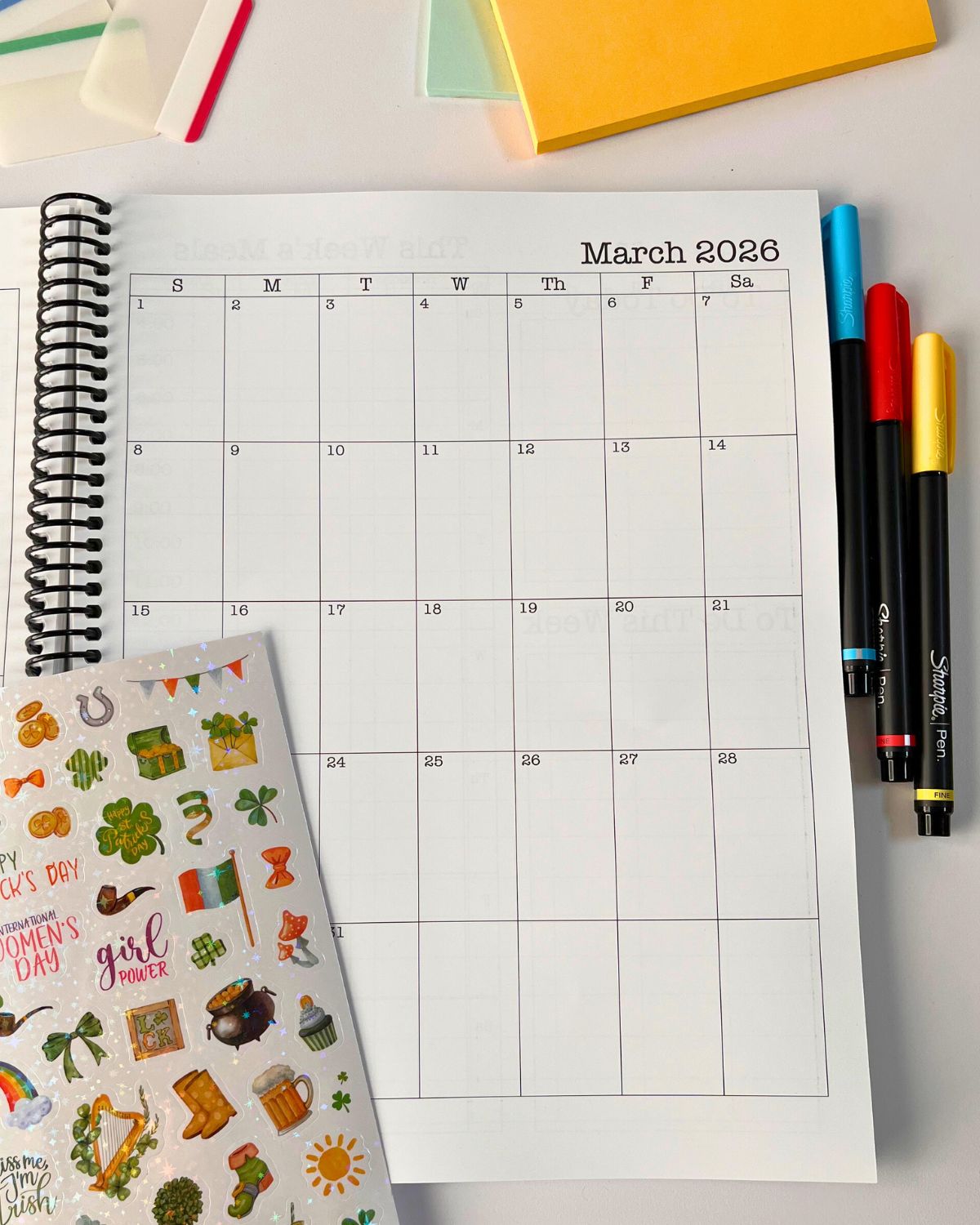
What’s coming up in the next week that needs to be accounted for? Busy days and dinner guests will impact your meal plans and your budget.
Will you be away from the house at meal times? Consider meal ideas that can be packed on the go or made in advance so it’s easy to eat without resorting to take-out.
Life feeling chaotic? Whenever possible, plan meals that are easy so you don’t even have to think twice about cooking. This might be a No Cook Dinner or a one pot or slow cooker recipe.
Company coming for dinner? Celebrating a special occasion? Plan for that meal first since you’ll want it to be a little more special and you’ll want to make sure you can do it in a budget way.
Use what you have.
You may be able to save time and money by shopping your kitchen instead of going to the store. You’ll avoid food waste, too.
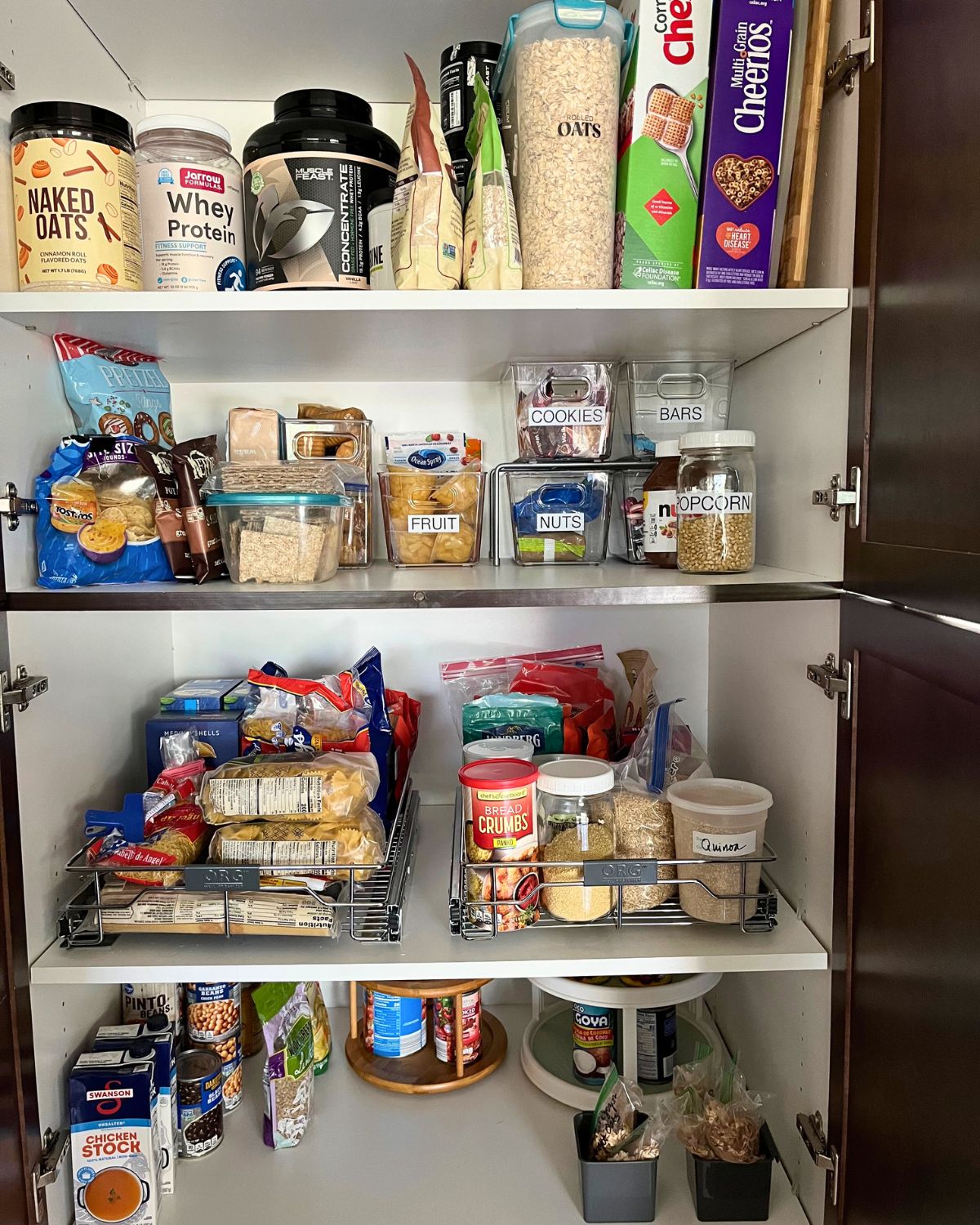
Take a real close look at what you have in the cupboards, fridge, and freezer. I bet there’s more there than you think.
Save some money this week by planning meals around what you already have. This is the first and easiest way to meal plan on a budget.
If you don’t have a great way to keep track of your supplies, start an ingredients inventory so you know what needs using. That will help you know what you have to work with.
Pro tip: Read the post –> How I Learned to Make Dinner with What I Have
Check the grocery sales.
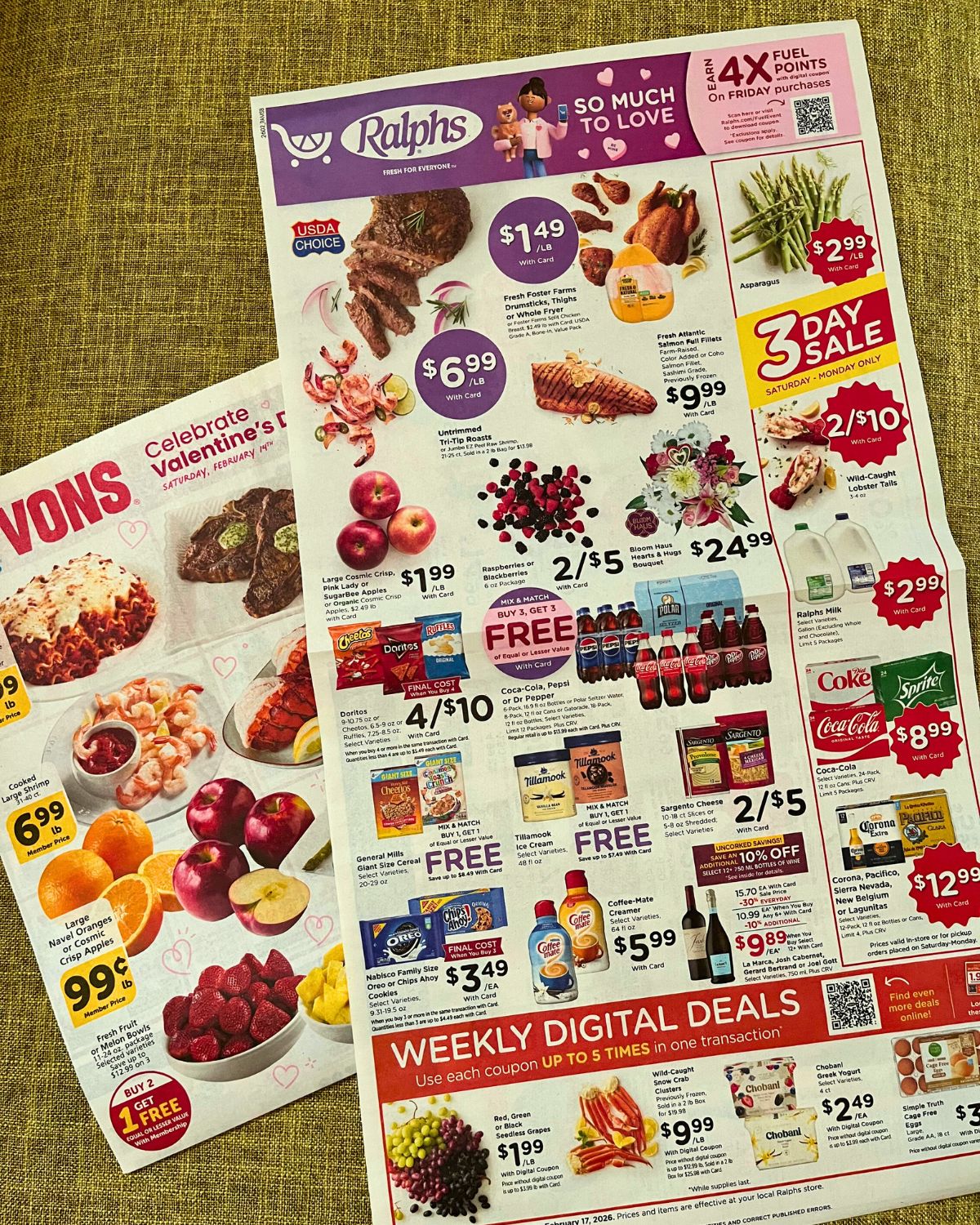
If you don’t have a ton of proteins stashed in your fridge and freezer, then it’s a good play to check what’s on sale this week. Shopping the grocery sales is a great money-saving habit.
Since you’re already going to buy some main dish proteins, why not buy the budget protein sources? You’ll get more meals for your money.
Be sure to look at the “loss leaders”. A loss leader is an item that the store offers at a rock bottom price, one that they will probably take a loss on, but it’s worth it to them to have you come through the door.
A great example is the boneless, skinless chicken breast on sale for $2.49/pound. It doesn’t really get lower than that. Buy some for this week but add a few extra packages to the cart so that you can freeze it for future weeks.
You’ll be able to plan budget meals around cheap ingredients now and later.
Not sure what to make for dinner with what you find on sale? Check out some of these cheap and easy meal recipes using common proteins:
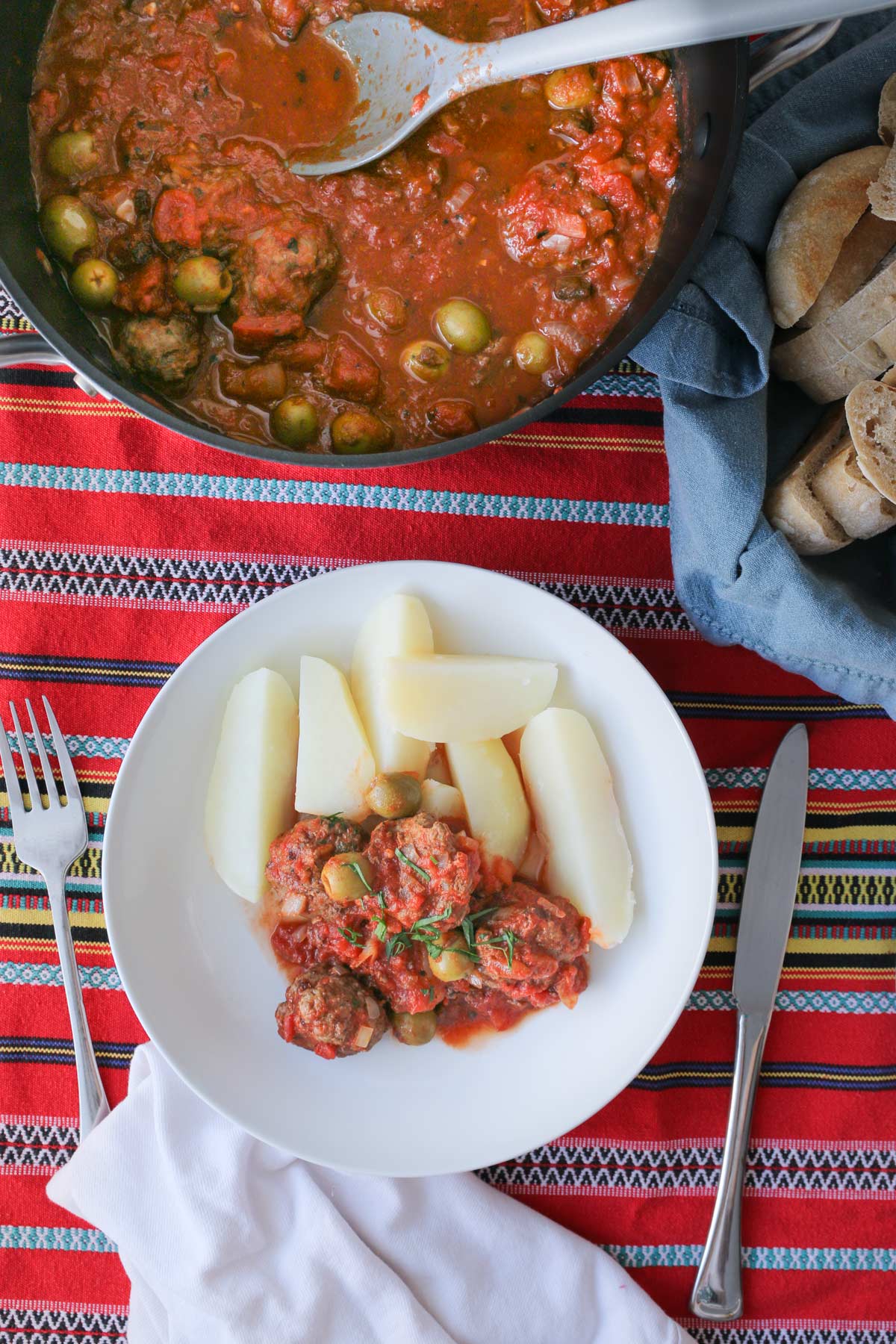
Focus on naturally frugal ingredients.
Build frugal meal plans based on foods that are always a good deal.
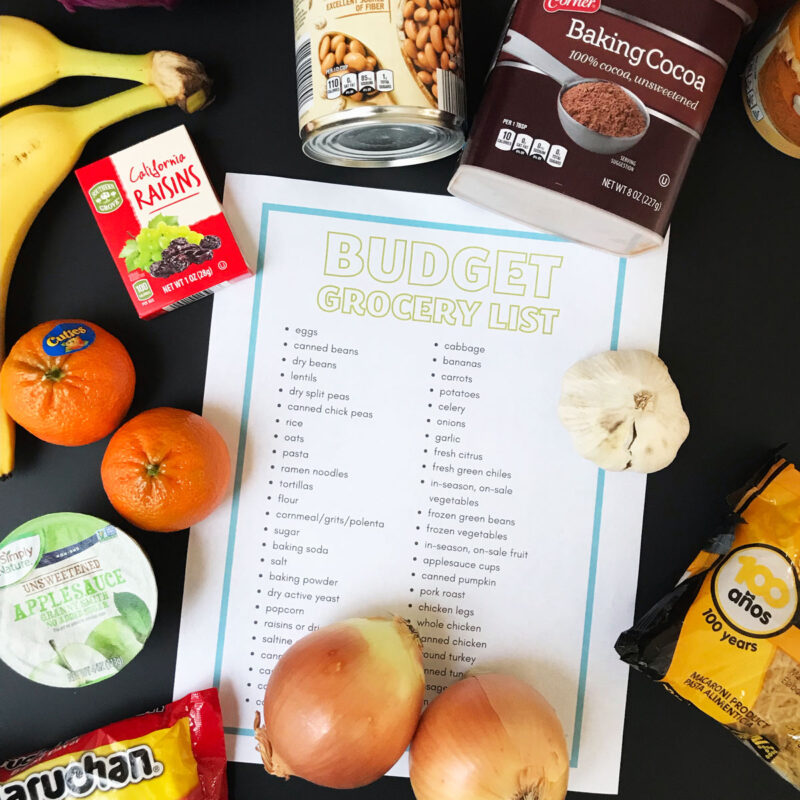
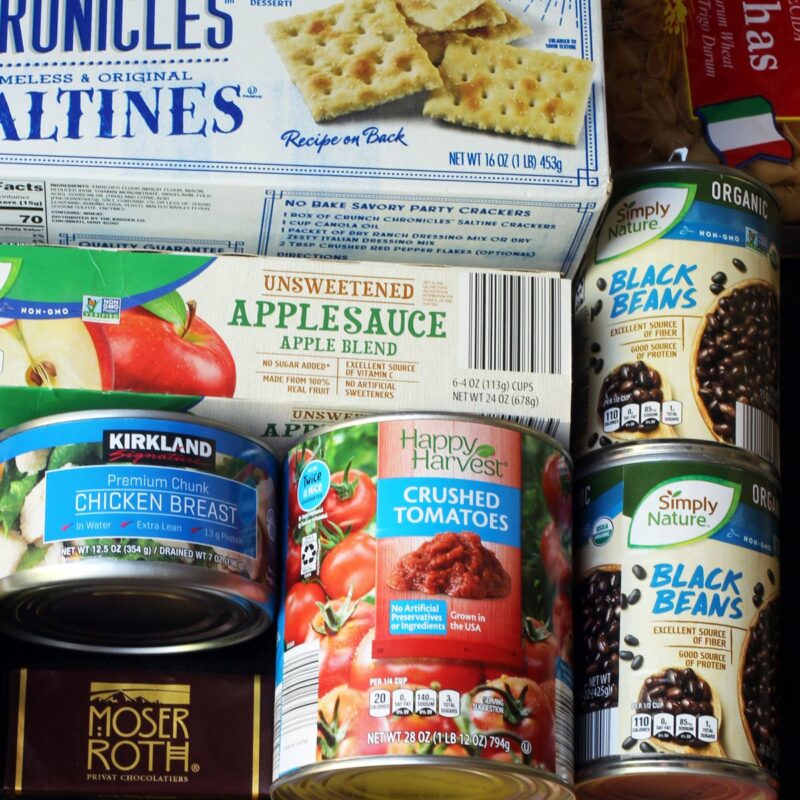
There are some common, budget grocery items that are always a reasonable price; beans, rice, oats, frozen veg, canned tuna, and eggs are good basics to focus on. These are incredibly versatile and will be lower priced almost all the time, making them great to add to your budget meal plans.
Ground beef and pork tend to be cheaper proteins, but this will vary based on location and market conditions.
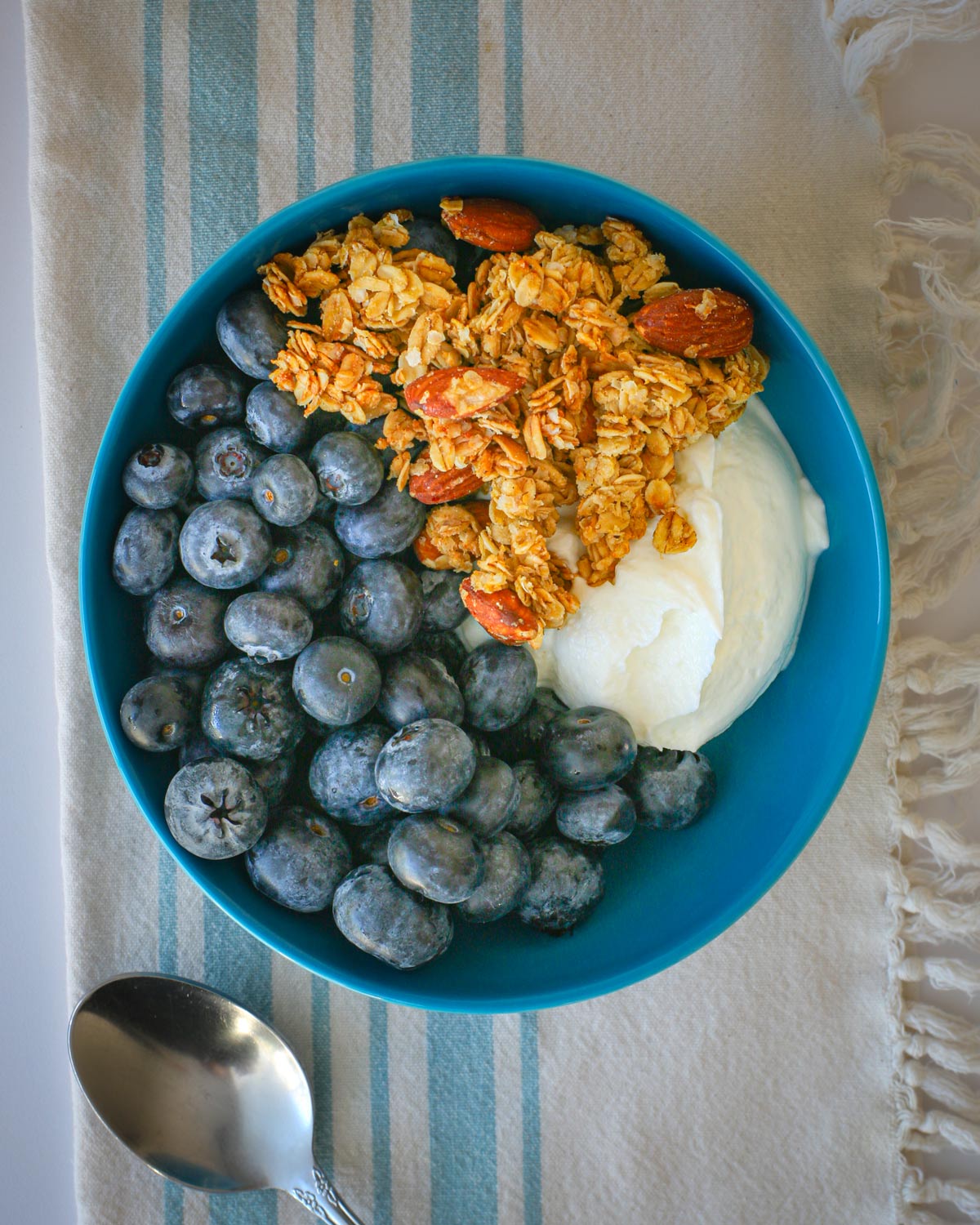
Plan all the meals of the week.
Even if you don’t have a formal meal plan for breakfasts and lunches — though I think it’s a good idea — make sure you’ve accounted for the foods you normally eat at those meals. You’ll still need the groceries for them.
Making breakfast meal plans and a regular lunch rotation can be great for sticking to your budget.
For top level meal planning, plan all meals you’ll be eating this week so you can stretch your ingredients and grocery money in the smartest way.
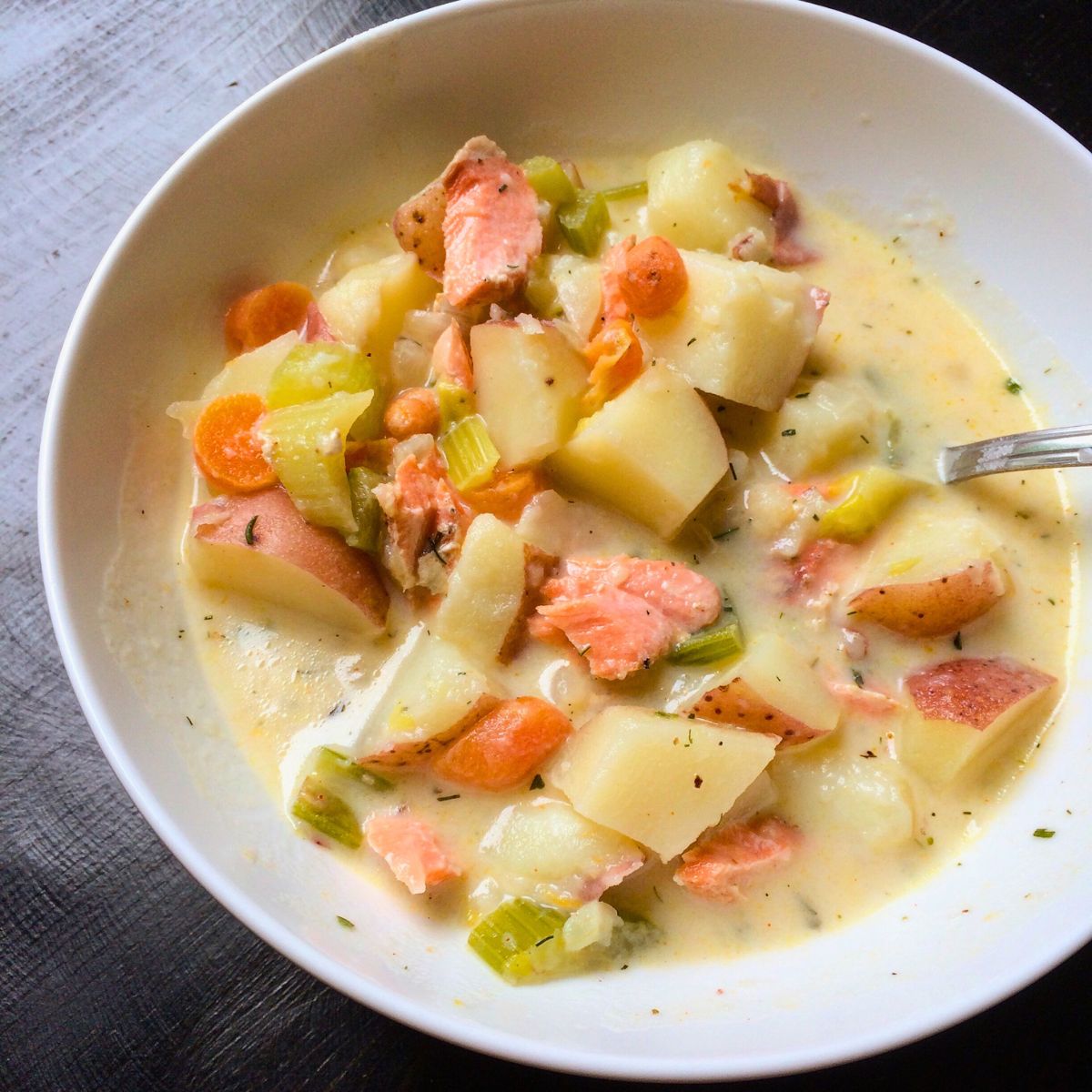
Don’t forget leftovers!
Do you know which meals always end up with leftovers? If so, plan for that. There are so many tasty things to make with leftovers.
You can easily work leftover chicken or leftover ham into other recipes that taste delicious. I love to make soup from leftovers.
If you’d rather avoid leftovers, then consider making less so that nothing goes to waste.
Consider, too, leftover ingredients. Whenever you can, plan meals that share ingredients so that you can make sure nothing goes to waste.
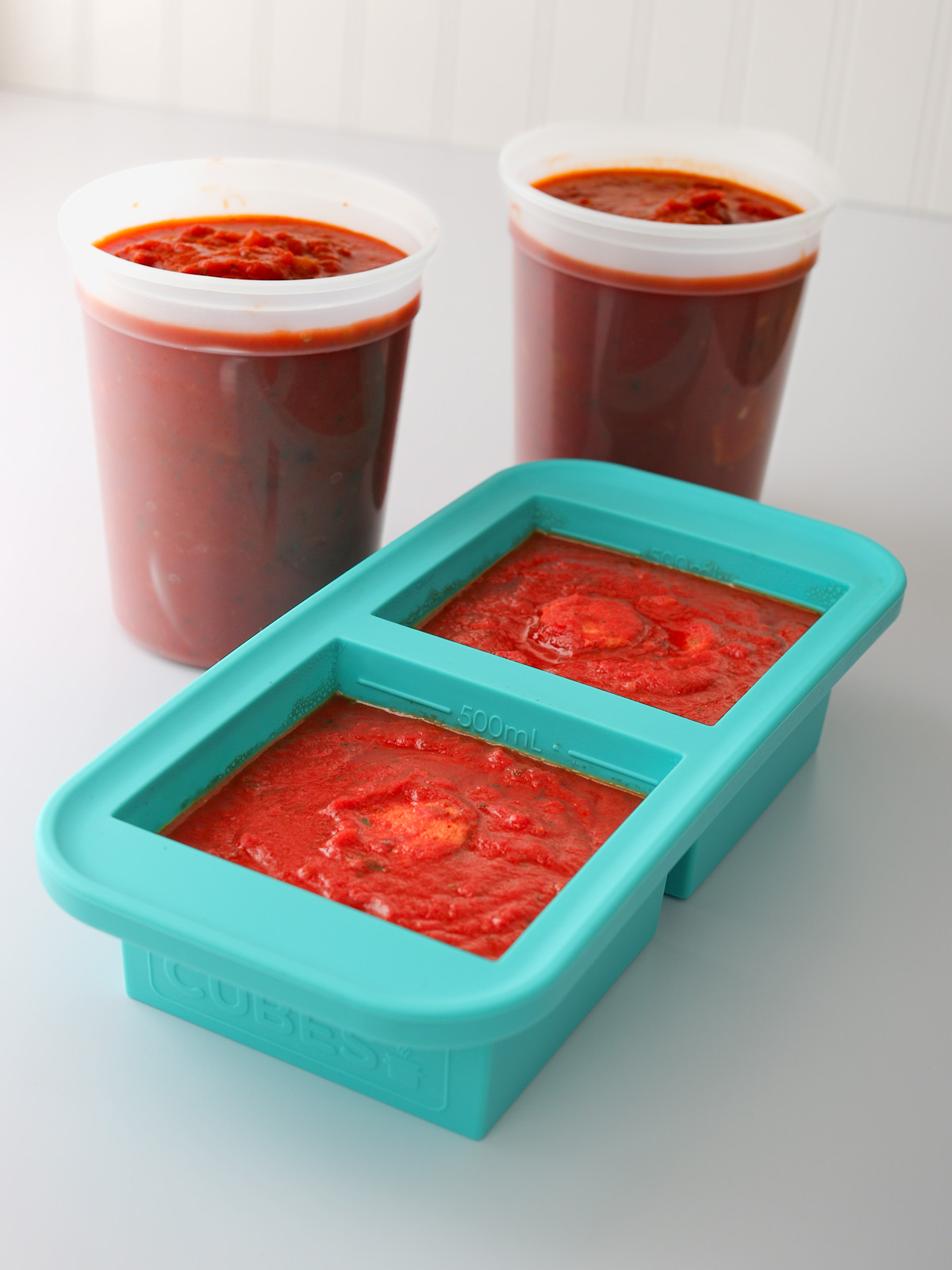
Remember to freeze extra for later.
Look through your meal plans for the week. Is there anything that freezes well?
Whenever you can, double dinner or batch cook extra to freeze; you’re making an easy meal plan for future you.
This is the easiest way to freezer meal prep and it will help your future meal plans stay on budget.
FAQs
The cheapest meals are those made from ingredients you already have on hand. After that, focus on regularly frugal ingredients, such as beans, eggs, rice, frozen veg, oats, and canned tuna.
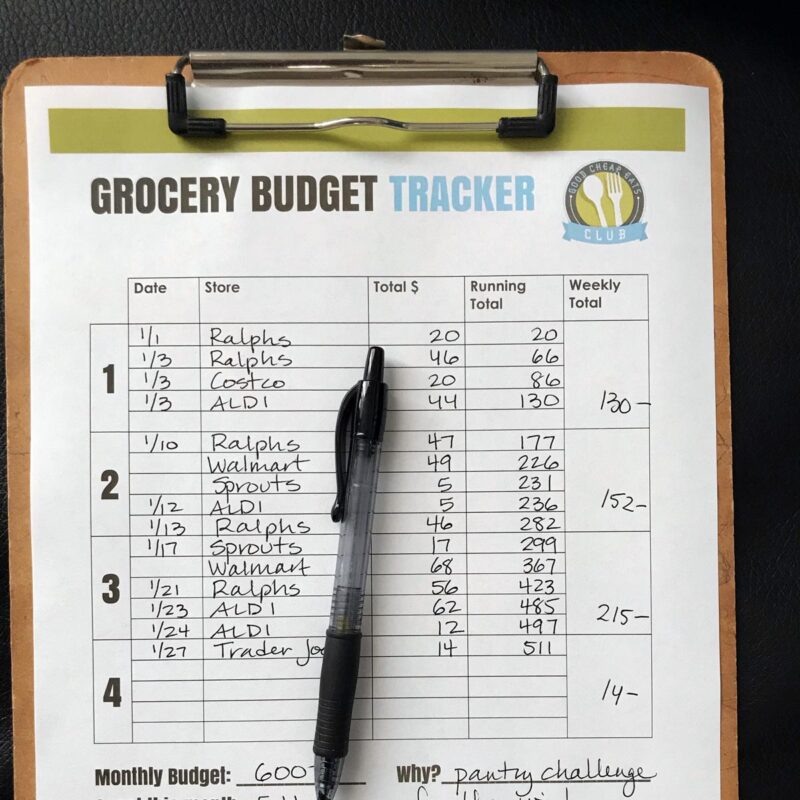
Identify how much money per month you can spend on food. Setting a food budget is a great start. Then, divide that amount into four, allowing yourself no more than that amount to spend on groceries as well as meals out.
A meal plan can save you money if it’s taking into account the food you already have at home, generally frugal ingredients, and sales as well as avoiding food waste.
The same rules apply to a healthy meal plan on a budget. Sourcing, that is determining the best grocery store for the things you buy will help you keep to your budget as well as your food goals.
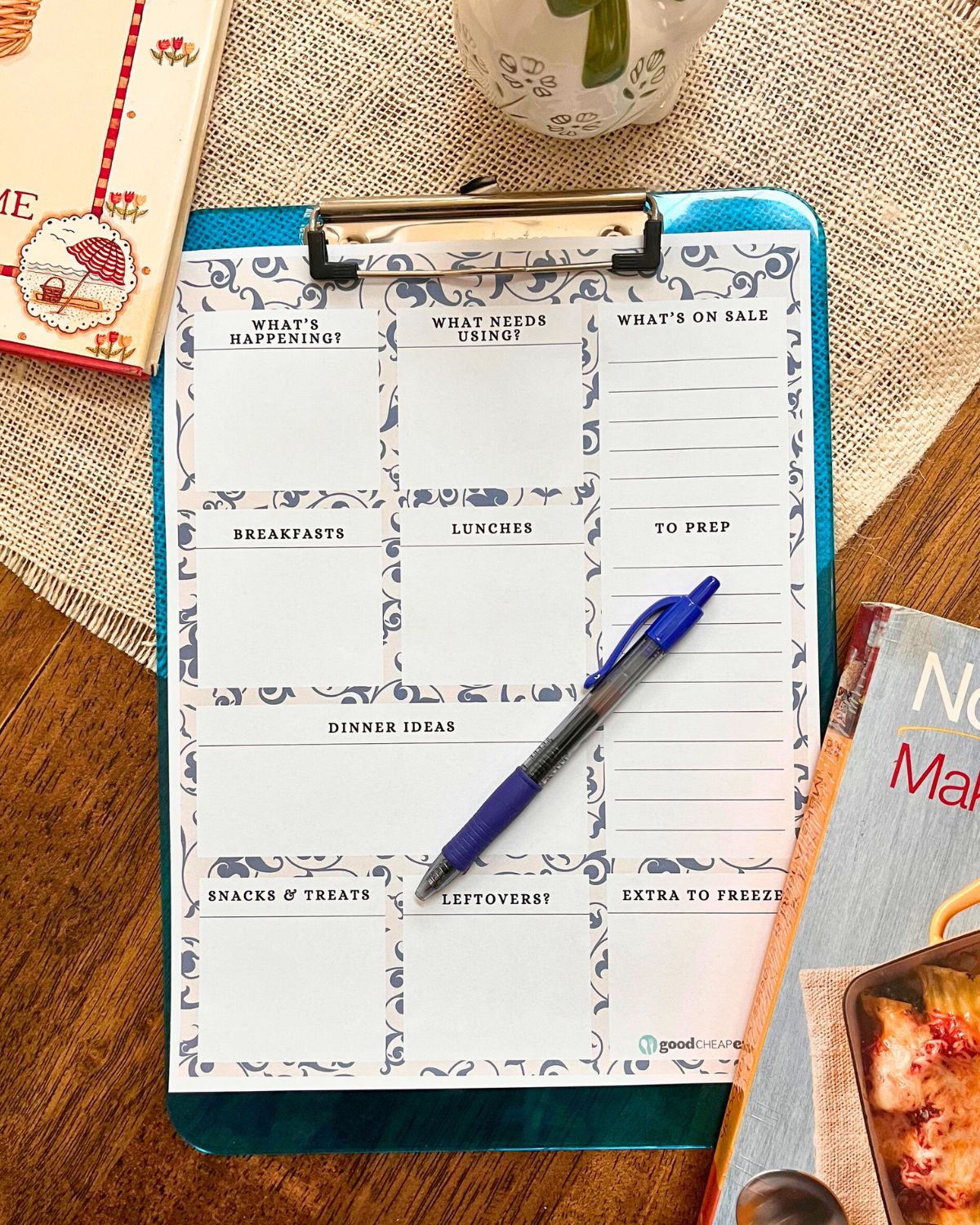
Free Weekly Meal Planner
Need some help organizing your meal plan on a budget? Be sure to visit our free resource library to download worksheets to help you inventory and meal plan on a budget.
Sample Budget Meal Plan
Feel free to copy this! Just click generate shopping list, and you’re good to go. Each recipe is linked in the chart below.
More Budget Strategies
What do you think?
Let’s chat in the comments!
This post was originally published on January 19, 2014. It has been updated for content and clarity.
Pat Cote
I believe that shopping the pantry first is the most important. For me–if I already have food I should use some of it up before buying more. Coming off this season of the pandemic and not wanting to run out of needs and the fact that my husband brings leftovers home from catering July has been deemed Pantry Challenge time for me. Our only needs are fresh produce–everything else I need is already here-i hope.
Jessica Fisher
We’re going to do a PC, too. Just haven’t decided what allowance I’ll set for myself to buy deals. Hmmm….
Janet
Stockpile the holiday sales. Green beans, evaporated milk, cranberry sauce, stuffing, and baking supplies are ALWAYS on sale between the middle of November and the first of January. Knowing this, I try to save a little back in August, September and October so I can stock up when items are on sale. More often than not I have a coupon as well. Last year our neighborhood grocery had a flash sale last and I was able to purchase a dozen cans each of green beans, cranberry sauce and evaporated milk for 10 cents a can.
Jessica Fisher
Yes! I think I get MORE excited about shopping AFTER Thanksgiving and Christmas than I do before!
Susan L. @ Full Happy Muffin and Mama
I believe in stockpiling ingredients that can be used in a wide range of ways. I also cruise the aisles if I’m on my own and don’t have to worry about a three-year-old having a temper tantrum for clearance items (of items that I use frequently), marked down meat, and produce (Our local Brookshire’s marks down lettuce bags to 99 cents a container–all usable). I wish we still had the bread thrift store, but when Hostess went belly-up, so went the Hostess bread store. I try to keep two-three weeks of food on hand at any time, just in case. That way, only things like milk and fresh produce have to be replenished. Over Thanksgiving weekend when the flu hit, there was no grocery shopping for that week. We ate from the stockpile.
Jessica Fisher
I love having a stockpile. It makes it so nice to just shop the cupboards.
Sally C
I love this! I wrote the steps down and put them in my kitchen.
May I add one sub-step to the inventory? In addition to making an inventory of available food, make an inventory of available funds as well. Sometimes right before payday, I can see that I have extra grocery funds and will elect to buy more meat or stock up items. If I’m skidding in to payday with just $6.00 remaining, I’ll pick up basic produce and dairy to get me through the next few days. I need to do food inventory about every 10 days.
There is such power in knowing what you have! Yesterday I determined the only available meat I had was ham so it was going to have to be potato soup for dinner. Tonight is ham and cheese gyoza. I was motivated to do a search for ham recipes only after I made up my mind not to give in on my pantry challenge until my end date.
Jessica Fisher
Yes! Tracking your spending is essential. I use the GoodBudget app that lets me track different digital envelopes for our spending. I know with a click how much is left.
CeCee
I think that a price book is the most important part of budget foods. I have a certain dollar amount that I will spend on any given product max and a dollar amount that is rock bottom stock up price. Example; bone in skin on chicken. The most I will spend is 1.99 lb the stickup price is 1.39lb or less. This helps me keep the freezer full for a smaller amount of money.
Jessica Fisher
How do you track your price book? Mine’s in my head….
CeCee
Mine has evolved over time. My mom always had one in her head so that’s how I did mine. Until I moved to Reno from Louisiana. Then I had to learn things all over. Shrimp can get down to 1.99lb in La in Reno 7.99lb is a deal. Produce is soooo much cheaper here than there. So I had an actual “book”. Now I have a 4×6 index card with items that I buy semi-frequently, but might forget the price of. I break things like peanut butter down to the per ounce price
Jessica Fisher
The index card is a great idea!
Stephanie M.
I’m learning to be a better budget meal planner by having participated in the most recent pantry and freezer challenge. Now instead of running out to the store and making an impulse purchase based on what I have decided I feel like eating on any given day, the night before I check my freezer to see what I have and then go to my pantry to see what will go with it and if I have what I need to make that particular meal. If I can get away with making that meal with what I have, I do it; if I don’t I might just prepare the meat from the freezer a different way or just omit something from the recipe if possible. As far as loss leaders, every morning, my local grocery store has a few shopping carts set up with bread and rolls that are a day past their sell date. I frequently go through it at find something I can use. Yesterday, I purchased a 2-pack of Italian bread for 99 cents. I froze it for later next week to make garlic bread with it. The bread always tastes fine; when you buy it fresh and at top price, it sits in your house for a few days anyway. When I buy from that cart, and it is often, I usually freeze it in portions and use what I need when I want it. I also look out for “manager’s specials” on meat. If it’s something I’m not planning on cooking that day, I freeze that until I need it.
Jessica Fisher
I’m so thrilled that the pantry challenge was a good experience for you!
I, too, love the day old bread cart and the manager’s specials. It’s like Christmas. Only not.
Stephanie M.
Jessica, you have no idea how much you’ve motivated me and to see so many other ladies participating was also motivating. This was a GREAT experience for me and I can’t wait to do it again in July. Today I went into my freezer and took an inventory; I’m guessing that I have about enough in there to make another 25 meals or so and that doesn’t necessarily mean 25 days because some of those meals will provide leftovers. But I am extremely committed to following this through till the end. I am truly having a great time with this and saving some cash too!
Jessica Fisher
Wow! I’m so excited for you. 🙂
Molly
I needed this today. My husband and I are planning a move soon that will help his career path immensely, but means I will leave my very well-paying job to become a stay at home wife. I especially like the concept of prioritizing must haves and would likes. Must have fruits, veggies, baking basics, and beans. Would like to have canned beans instead of dried for convenience, granola bars, and yummy things that catch my eye.
Jessica Fisher
I am reading a health book and just read about how much better dried beans are since you avoid the BPA. So, see the cheaper kind is better for you. 😉